




News
Champagne Glass Holding and Swirling Techniques
The core of tasting champagne lies in bubble persistence and aroma layers, and the techniques of holding and swirling the glass directly determine how these two key elements are presented. Different from the operation logic of red and white wine glasses, the techniques for champagne glasses must focus on "temperature control and preventing rapid bubble loss".
I. Holding Techniques: Temperature Control First, Stability to Prevent Spills
The optimal serving temperature of champagne is 6–8℃. High temperatures will accelerate bubble dissipation and damage the refreshing acidity of the wine. The core principle of holding a champagne glass is to avoid large-area contact between the palm and the cup body. The specific methods adapted to different scenarios are as follows:
1. Classic Standard Grip: Pinch the Stem
Suitable for mainstream champagne glasses, such as flute glasses and tulip glasses, it is the formal method for business banquets and tasting events.
· Operation: Pinch the upper-middle part of the stem with your thumb and index finger, and naturally bend the other three fingers to lightly lean against the stem, keeping a distance of 5–10mm between the palm and the cup body.
· Advantages: Completely isolates the palm temperature to avoid heating the wine; ensures a stable grip, preventing spills when swirling; presents an elegant posture that conforms to tasting etiquette.
· Notes: Avoid hooking the stem with fingers or gripping it tightly. The former may cause shaking and spilling, while the latter will slightly transfer heat.
2. Outdoor Scenario Grip: Hold the Base
Suitable for mobile scenarios such as picnics and parties, balancing stability and portability.
· Operation: Support the bottom of the base with your index and middle fingers, and lightly attach your thumb to the edge of the base, still keeping the palm from touching the cup body.
· Advantages: More stable than pinching the stem, making it less likely to tip over when moving; only a small amount of temperature is transferred through the base, which will not affect the wine in a short time.
· Taboo: Do not hold it for more than 5 minutes, to prevent the temperature of the base from slowly transferring to the cup body and accelerating bubble loss.
3. Vintage Coupe Glass Grip: Pinch the Rim
Designed for coupe champagne glasses—this type of glass has a large rim and short stem, making temperature control difficult.
· Operation: Pinch 1/3 of the rim edge with your thumb and index finger, keeping your fingers as close to the outer side of the rim as possible to minimize contact with the wine.
· Notes: Coupe glasses themselves are not conducive to bubble retention, so it is recommended to drink quickly and avoid prolonged holding.
II. Swirling Techniques: Gentle Swirling to Release Aromas Without Losing Bubbles
The purpose of swirling champagne is to allow the wine to make slight contact with air and release aromas such as yeast and citrus. However, excessive swirling will cause bubbles to "disappear instantly". Unlike the large circular motions used for red and white wine glasses, the core of swirling champagne glasses has a small amplitude and low frequency.
1. Beginner’s Method: Light Tabletop Swirling
Suitable for those new to champagne tasting, with zero mistakes and no spills.
· Operation: Place the glass on a flat table, pinch the stem with your thumb and index finger, and make small clockwise circles around the base as the axis. Control the amplitude within a 5cm diameter and keep the speed slow.
· Observation Effect: The wine forms a slow-rotating vortex on the inner wall of the glass, and bubbles continuously rise from the bottom without a large amount of foam overflowing the rim.
· Duration: 3–5 seconds of swirling is sufficient; no need for a longer time.
2. Advanced Method: Handheld Suspended Swirling
Suitable for formal tasting scenarios, allowing more precise control of aroma release.
· Operation: Adopt the stem-pinching grip, lift your arm naturally, and make "small pendulum movements" or "micro circles" with the glass using your wrist as the axis. Ensure the wine surface fluctuation does not exceed 1/3 of the cup body.
· Core Essentials: The force should come from the wrist rather than the arm to avoid large-amplitude shaking; keep the glass vertical when swirling to prevent wine spills.
· Glass Adaptation: Tulip glasses have a narrow rim that prevents aroma loss during swirling, so the duration can be appropriately increased by 1–2 seconds; flute glasses have a slender body, so the swirling amplitude should be further reduced.
-
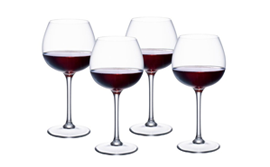
Best quality clear color goblet wine glass cup fish bowl
Capacity : 550ml
Height:20.8cm
Diameter:10.2______ -
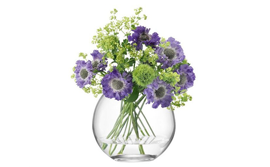
Home decoration clear globe cheap design flower vases glass
Height:16cm
color:clear
material:glass______
- Navigation About us Product glass process news Contact us FAQ
- Product drinking glass Double wall glass Whisky glass Glass pitcher Shot glass Glass vase Glass plate Wine glass Champagne glass Beer glass
- Contact us Email:midasglassware@aliyun.com
Tel : 0351-6814886


